Spring 1915
Aadam’s Prayerful Injury
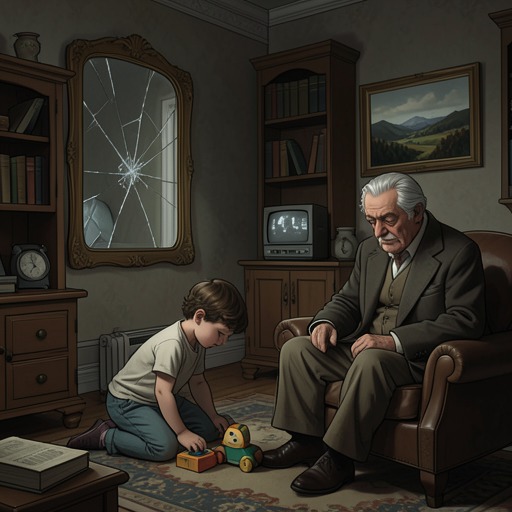
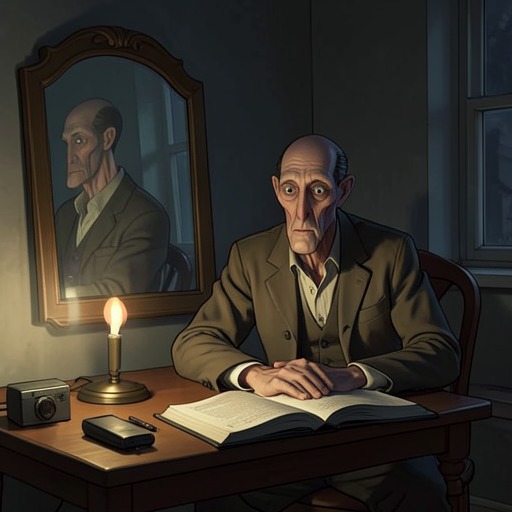
After studying medicine in [Germany](entity:location-recall-location-germany-2e3723c2f347) for five years, Adam Aziz returned to [Kashmir](entity:location-recall-location-kashmir-807a93287569). While praying, his nose collided with the frozen ground. The frozen blood and tears before him shook his certainty of religious obedience; he decided henceforth never to bow to God or men again. The inner void thus created made
Spring 1915, after Aadam’s return
Tai’s Stories and Warning
Tae rowed a boat across [Dal Lake](entity:location-recall-location-dal-lake-e932dcddb280), calling Adan Aziz to take care of the daughter of Gani. The old boatman claimed he had seen emperors in [Kashmir](entity:location-recall-location-kashmir-807a93287569), even Christ; he taught Adan to look at the nose as the point where the inner and outer worlds
1915
The Perforated Sheet
Gani Zhaodaan treated his daughter Naseem, but required her to stand behind a white sheet with a small hole in the center. The doctor could only examine the part of her body that was in front of the hole. First, it was her stomachache, then a series of
1918–1919
Aadam Leaves Kashmir
Adam's affair with the single bedsheet continued as his medical career developed. In the end, he married Nasim to Gani and accepted a university position in [Agra](entity:location-recall-location-agra-0ed22732fd5c); they married in March 1919, and the hole in the bedsheet was included in the dowry. At
April 13, 1919
The Amritsar Massacre
Gandhi launched a nationwide strike call. Subsequently, the [Rowlatt Act](entity:rule-recall-rule-rowlatt-act-2023ff7e6b6d) caused unrest, and Adan and Naseem were trapped in [Amritsar](entity:location-recall-location-amritsar-5e6a472a45a9). On April 13th, as people gathered peacefully, Adan entered the Jallianwala Garden with a medical kit
1918–1932
Aadam’s Family in Agra
After arriving in [Agra](entity:location-recall-location-agra-0ed22732fd5c), the marriage of Adam and Naseem became a battleground between the Parda system and modernity. Naseem refused to remove her veil, so Adam burned her veil; soon after, the two were involved in the violent [Amritsar](entity:location-recall-location-amritsar-5e6a472a45a9) massacre, and Adam survived
1942
The Hummingbird’s Opposition
[Agra](entity:location-recall-location-agra-0ed22732fd5c) during the war, Adam Aziz supported Mr. Abdullah, known as the [Hummingbird](entity:character-recall-character-hummingbird-d105ed91606a), and the Free Islamic Congress. This movement provided another path for the [Muslim League](entity:organization-recall-organization-6dd4b1fee3c4) and opposed partition. Rani of Kuchinahin funded the gatherings, while Adam's daughter Mumtaz was
1942
The Hummingbird’s Assassination
Masked assassin attacked Mr. Abdullah and his secretary [Nadir Khan](entity:character-recall-character-nadir-khan-5e8de1b4ef75) at the office of the Free Islamic Congress. A widely spread legend says that Mr. Abdullah's unusual buzzing sound attracted thousands of dogs, which drove the assassin away, allowing Nadir to escape; the official version remains unclear
1942–1945
Nadir and Mumtaz’s Secret Marriage
During the time Nadir was hiding underground, Mumtaz brought him food and took care of him. Their quiet exchanges gradually turned into love. Adam arranged their secret marriage and gave them a fully furnished underground room, which they called the Taj Mahal. During the day, Mumtaz lived
1946
Mumtaz Marries Ahmed
At the jade wedding, newly divorced [Mumtaz Aziz](entity:character-recall-character-mumtaz-aziz-13f0445cfb80) met [Ahmed Sinai](entity:character-recall-character-ahmed-sinai-cb1b6cbe3cbb), a former suitor of Aria. They talked well and both liked children, so they gradually moved towards marriage; Ahmed asked her to take a new name, Amina, and start over. Aria felt betrayed
1946–1947
Amina Learns to Love Ahmed
In [Delhi](entity:location-recall-location-delhi-0ebfda7a8b21), Amina set herself the task of gradually learning about Ahmed and learning to love him, just as Adam had pieced together Nausim through the small holes in the bedsheet. Amina's meticulous housework gave Ahmed's otherwise single home a warmth, but Nadir's dreams and
January 1947
The Warehouse Burns
The [Ravana gang](entity:character-recall-character-ravana-gang-f574397b21dd), disguised as an anti-Muslim group, asked money from [Ahmed Sinai](entity:character-recall-character-ahmed-sinai-cb1b6cbe3cbb) and his companions and threatened to burn their warehouse. In [Old Delhi](entity:location-recall-location-old-delhi-ef24e27d8df4), monkeys overturned a money bag left for the extortionists by the merchants. When everyone returned, they found the money gone, but the warehouse was still
January 1947
Amina Rescues Lifafa Das
In a alley in [Delhi](entity:location-recall-location-delhi-0ebfda7a8b21), a group of people accused the operator of the box, Lifa Das, of violating the Muslim girl. Amina stepped in, mocked the mob's supposed chivalry, and announced that she was pregnant, provoking the attackers to say that they would harm her protector
January 1947
Ramram’s Prophecy
At the rooftop gathering of the magician and the performer, Ramlam Seth made a fervent prophecy to Amina: her son would be of the same age as her country; he would have two heads, but his mother would see only one; his fate would be connected to the nose, the
June 1947
The Methwold Estate Bargain
In Mumbai, Ahmed and Amina bought a villa belonging to William Meswold, with the condition that all the British furnishings inside the house be retained, and they would receive the property only at midnight on August 15th. Meswold called this transaction his personal version of a power transfer
Late 1946–August 1947
Methwold’s Secret and Vanita’s Pregnancy
[William Methwold](entity:character-recall-character-william-methwold-3667c4aa5dcb) had seduced the accordionist’s wife, [Vanita](entity:character-recall-character-vanita-f76462f0a155), while her husband, [Wee Willie Winkie](entity:character-recall-character-wee-willie-winkie-1f423ce5316c), was away. As independence approached, both Vanita and Amina were pregnant, and the Times of India offered a prize for a child born at the nation’s midnight.
Amina believed Ramram’s prophecy and expected her son to arrive on time. Vanita entered a prolonged labor at [Doctor Narlikar’s Nursing Home](entity:location-recall-location-doctor-narlikar-s-nu-0a2ba18dff24), while Amina’s pregnancy advanced amid monsoon rains and the mounting national countdown.
Midnight, August 15, 1947
The Midnight Baby Swap
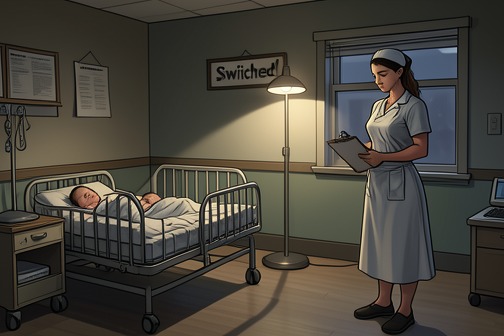
At the instant India became independent, Amina gave birth to a boy in [Doctor Narlikar’s Nursing Home](entity:location-recall-location-doctor-narlikar-s-nu-0a2ba18dff24). In the next room, [Vanita](entity:character-recall-character-vanita-f76462f0a155) delivered a boy and died from hemorrhaging. The midwife [Mary Pereira](entity:character-recall-character-mary-pereira-3d16748f09cc), hoping to win back her lover [Joseph D’Costa](entity:character-recall-character-joseph-d-costa-646e9b145d60), switched the babies’ name-tags: Vanita’s son became [Saleem Sinai](entity:character-recall-character-saleem-sinai-0f50ad69f9e8), while Amina’s biological son was given to [Wee Willie Winkie](entity:character-recall-character-wee-willie-winkie-1f423ce5316c).
Amina recognized Saleem as her own and celebrated winning the newspaper’s birth prize. The switch established the novel’s central conflict between biological parentage and the family created by love, habit, and shared history.
August 1947–1948
Saleem’s Early Omens
Saleem grew rapidly, had blue eyes, a large nose, birthmarks, and an inability to blink. A letter from [Jawaharlal Nehru](entity:character-recall-character-jawaharlal-nehru-44c8580f2d4f) congratulated him on his birth and declared that the nation would watch his life as a mirror of its own. Mary, frightened by the letter, worried that the government somehow knew the baby’s secret.
Saleem’s birth and unusual features drew attention across Methwold’s Estate. His early life was crowded with competing claims: Amina’s maternal devotion, Mary’s guilt, his father’s hopes, and the prophecies that attached his private fate to India’s public story.
1947–1956
The Children of the Estate
Saleem became the center of attention among the families of Methwold’s Estate, while his sister, the [Brass Monkey](entity:character-recall-character-brass-monkey-f29fee3049e7), fought to be noticed through mischief and shoe-burning. Their father began drinking heavily and pursuing secretaries; the estate’s children grew up under the shadow of the old clocktower and the lingering habits of its former colonial owner.
Saleem remained close to the Monkey, despite his own privileged status and her resentment of being overlooked. Their childhood was shaped by family secrets, everyday humiliations, and the extravagant expectations attached to Saleem’s supposed destiny.
1948–1956
The Freeze and the Tetrapods
After the government froze [Ahmed Sinai](entity:character-recall-character-ahmed-sinai-cb1b6cbe3cbb)’s assets, his marriage and business life deteriorated. He turned to alcohol, then joined [Doctor Narlikar](entity:character-recall-character-doctor-narlikar-ab468fb3fb04)’s scheme to reclaim land from the sea with concrete tetrapods. Narlikar’s death crushed their plans, and the [Narlikar women](entity:character-recall-character-narlikar-women-043ac73e421c) took control of his business interests.
Ahmed became increasingly isolated and eventually turned white, while Saleem watched his father’s decline and absorbed the family’s unstable myths. The tetrapod dream linked private ambition to [Bombay](entity:location-recall-location-bombay-b9f73c3bdba6)’s physical expansion and foreshadowed the larger cycle of loss and failed control.
Summer 1956
Saleem’s First Telepathic Voices
After hiding in a [washing-chest](entity:object-recall-object-a9a0ec1819b9), Saleem accidentally sniffed a drawstring into his nose while witnessing Amina in a private moment. The pressure in his sinuses burst into his brain, where a chorus of voices began speaking. He believed at first that angels were addressing him.
When he told his family, Ahmed struck him, leaving his left ear damaged. Saleem then realized that the voices belonged to ordinary people and learned to control the volume, listen to individuals, and conceal his ability. The accident gave him an extraordinary power but taught him to hide what he knew.
Early 1957
The Bicycle Collision
Trying to impress [Evelyn Lilith Burns](entity:character-recall-character-evelyn-lilith-burns-c3f0d931efdc), Saleem learned to ride a bicycle and collided with [Sonny Ibrahim](entity:character-recall-character-sonny-ibrahim-a351f8399fca). Their foreheads fitted together: Saleem’s bulging temples settled into [Sonny](entity:character-recall-character-sonny-bd6b1751f871)’s forceps hollows. The collision opened Saleem’s mind to the midnight children, whose thoughts had been faintly calling to him.
He discovered that 581 surviving children born during the first hour of independence possessed extraordinary gifts, strongest among those born closest to midnight. Saleem and [Shiva](entity:character-recall-character-shiva-a32afbfe6397) had both been born at the stroke of twelve, one with a gift for minds and the other with the powers of war.
1957
The Language Riot
After Evie rejected Saleem and pushed him down a hill, he entered her mind and encountered a disturbing image of her killing an older woman. He fled into a language march and, when pressed to speak Gujarati, recited a taunting school rhyme that the crowd adopted as a battle chant.
The chant helped spark a clash between supporters of [Maharashtra](entity:location-recall-location-3fb43d899a0a) and Gujarat, leaving fifteen dead and hundreds wounded. Saleem later believed that this event made him directly responsible for the partition of [Bombay](entity:location-recall-location-bombay-b9f73c3bdba6) State and the city’s incorporation into Maharashtra.
1957–1958
The Midnight Children’s Conference
On his tenth birthday, Saleem recognized that the children he could hear had all been born during the independence hour. He formed the [Midnight Children](entity:character-recall-character-255cf5dc67dd)’s Conference in his mind and tried to make it a federation in which every child could discuss a shared purpose.
The children argued over leadership, politics, class, religion, and whether their gifts should serve private advantage or the country. [Shiva](entity:character-recall-character-shiva-a32afbfe6397) challenged Saleem’s idealism, insisting that power and material things ruled the world. The Conference reflected India’s divisions and began to fracture under the same pressures.
Early 1958
Saleem Loses His Finger
At school, geography teacher [Emil Zagallo](entity:character-recall-character-emil-zagallo-d40b075cce16) mocked Saleem’s face as a map of India and [Pakistan](entity:location-recall-location-pakistan-041a2aec3e49), then pulled out a clump of his hair. Later, at a school social, Saleem fought bullies to impress [Masha Miovic](entity:character-recall-character-masha-miovic-560e0a5209dd) and lost the top of his middle finger when a door slammed on it.
The injury prompted a blood test that showed he could not be the biological son of Amina and Ahmed. Amina insisted that he was their child, while Ahmed withdrew in doubt. Saleem’s physical fragmentation deepened the crisis of identity that had begun with the baby-swap.
1958
Saleem Exiled to Hanif’s Home
After the finger injury and the blood test, Saleem’s parents sent him to stay with his uncle [Hanif](entity:character-recall-character-hanif-4e9b48e43bb3) and aunt [Pia](entity:character-recall-character-pia-95923a4cd740) on [Marine Drive](entity:location-recall-location-marine-drive-943f298beb77). Saleem interpreted the arrangement as a punishment and tried to behave like a grateful guest, even as he felt displaced from the family that had raised him.
At the same time, he became entangled in [Homi Catrack](entity:character-recall-character-homi-catrack-fb86d4c0bf48)’s affair with [Lila Sabarmati](entity:character-recall-character-lila-sabarmati-b2e90f672448). Saleem passed Catrack’s anonymous note to Pia and later saw the collapse of her marriage to Hanif. His first exile turned him toward revenge and helped set the Sabarmati affair in motion.
1958
The Sabarmati Affair
Saleem revealed [Lila Sabarmati](entity:character-recall-character-lila-sabarmati-b2e90f672448)’s affair with [Homi Catrack](entity:character-recall-character-homi-catrack-fb86d4c0bf48) by placing an anonymous note in [Commander Sabarmati](entity:character-recall-character-commander-sabarmati-78e39f101d30)’s uniform. The Commander hired a private detective, found the lovers together, shot Lila and Catrack, and surrendered himself to the police.
The trial became a national argument over adultery, heroism, and the rule of law. Commander Sabarmati was convicted despite popular support, and the scandal destroyed several families on Methwold’s Estate. Saleem recognized that his supposedly private revenge had reshaped public life.
1958
The Estate’s Final Dispersal
After the Sabarmati affair, the residents of Methwold’s Estate began to leave. The [Narlikar women](entity:character-recall-character-narlikar-women-043ac73e421c) bought the vacated properties, while Ahmed refused to sell his home. The [Brass Monkey](entity:character-recall-character-brass-monkey-f29fee3049e7) crushed Saleem’s toy globe after [Sonny Ibrahim](entity:character-recall-character-sonny-ibrahim-a351f8399fca) departed, marking the end of the world of childhood.
During the mourning for [Hanif Aziz](entity:character-recall-character-hanif-aziz-ac93e47f1591), [Aadam Aziz](entity:character-recall-character-aadam-aziz-899ffd8b24be)’s body began to crack and decay. He said he had seen God, whom he identified as the strange apparition of the dead [Joseph D’Costa](entity:character-recall-character-joseph-d-costa-646e9b145d60). Mary eventually confessed that she had switched the babies, but Ahmed still treated Saleem as his son.
1958
Mary’s Confession and Saleem’s Exile
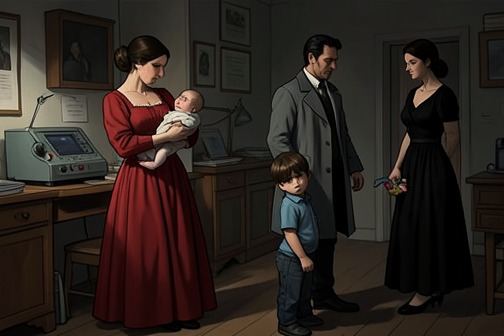
[Mary Pereira](entity:character-recall-character-mary-pereira-3d16748f09cc) admitted that she had exchanged the babies at birth. She had acted for [Joseph D’Costa](entity:character-recall-character-joseph-d-costa-646e9b145d60), hoping to win his love, then spent eleven years raising the child she had secretly chosen. Saleem learned that his biological mother was [Vanita](entity:character-recall-character-vanita-f76462f0a155) and his biological father was [Wee Willie Winkie](entity:character-recall-character-wee-willie-winkie-1f423ce5316c).
Ahmed forgave the returning leper [Musa](entity:character-recall-character-musa-e41b561d688e), but after Mary’s confession he erupted at Amina. [Reverend Mother](entity:character-recall-character-reverend-mother-4b0b0dd4aec8) persuaded Amina to leave with her children and [Emerald](entity:character-recall-character-emerald-ad7e819e58a6)’s family for [Pakistan](entity:location-recall-location-pakistan-041a2aec3e49). Saleem’s second exile severed him from [Bombay](entity:location-recall-location-bombay-b9f73c3bdba6), his father, and the [Midnight Children](entity:character-recall-character-255cf5dc67dd)’s Conference.
October–November 1958
Saleem Helps Ayub Khan’s Coup
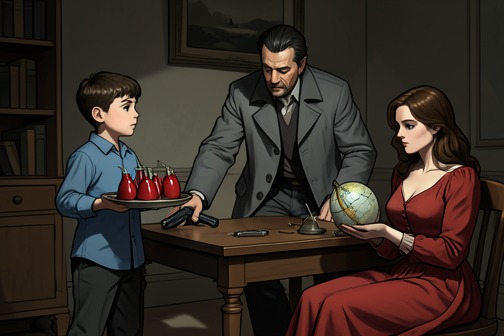
On the voyage to [Pakistan](entity:location-recall-location-pakistan-041a2aec3e49), Saleem arrived with Amina, the [Brass Monkey](entity:character-recall-character-brass-monkey-f29fee3049e7), and [Emerald](entity:character-recall-character-emerald-ad7e819e58a6)’s family. In [Rawalpindi](entity:location-recall-location-rawalpindi-caded2a8db9a), he witnessed [Ayub Khan](entity:character-recall-character-ayub-khan-a3043d31f187)’s seizure of power during a dinner at [General Zulfikar](entity:character-recall-character-general-zulfikar-e3fecba2392d)’s home. When Zafar wet his trousers after the coup announcement, Saleem helped General Zulfikar plan troop movements by moving pepperpots and tableware.
The symbolic game became a real military operation: Saleem accompanied his uncle as President [Iskander Mirza](entity:character-recall-character-iskander-mirza-d3525019de28) was seized and sent into exile. Saleem’s childhood effort to prove himself useful thus became a direct intervention in Pakistan’s political history.
September 1962
Jamila Becomes a Singer
At her fourteenth birthday gathering, the [Brass Monkey](entity:character-recall-character-brass-monkey-f29fee3049e7) was pressed to sing. Her extraordinary voice transformed her into [Jamila Singer](entity:character-recall-character-jamila-singer-699fbbb15147), and she soon became [Pakistan](entity:location-recall-location-pakistan-041a2aec3e49)’s celebrated angel of song. [Major Alauddin Latif](entity:character-recall-character-major-alauddin-lati-00f7d79d7630) developed a plan for her to perform behind a white-and-gold veil, preserving the family’s sense of propriety while turning her into a national figure.
As Jamila’s fame grew, Saleem faded into the background and became increasingly isolated. He began to feel a forbidden love for his sister, while the country claimed her voice as a symbol of religious purity and patriotism.
November 21, 1962
Saleem’s Sinus Operation
After [Ahmed Sinai](entity:character-recall-character-ahmed-sinai-cb1b6cbe3cbb) suffered a heart attack, the family returned to [Bombay](entity:location-recall-location-bombay-b9f73c3bdba6). Amina nursed him back to health, and Ahmed finally fell in love with her. Their reconciliation gave Saleem a brief hope of belonging, but it also drew his parents closer together and left him outside their renewed marriage.
On November 21, Amina and Ahmed tricked Saleem into going to an ear, nose, and throat clinic for sinus surgery. The operation cleared his nasal passages but severed the connection that had enabled his telepathy, ending his access to the [Midnight Children](entity:character-recall-character-255cf5dc67dd).
February 1963
The Family Moves to Karachi
The Siniais left [Bombay](entity:location-recall-location-bombay-b9f73c3bdba6) for [Karachi](entity:location-recall-location-be78f40f95f7), where they joined [Alia Aziz](entity:character-recall-character-alia-aziz-8cd921bbc866). Saleem’s telepathy was gone, but his sense of smell became extraordinarily acute, allowing him to detect emotions, motives, and moral character through their scents.
In the [Land of the Pure](entity:expression-recall-expression-land-of-the-pure-34b05d7becb2), he felt alienated from the city’s religious and political certainties. His parents attempted to begin anew, while Saleem remained attached to the lost world of Bombay and began to recognize the difference between his own identity and the life his family expected him to lead.
1963–1964
Jamila’s Masked Fame
[Major Alauddin Latif](entity:character-recall-character-major-alauddin-lati-00f7d79d7630) built [Jamila Singer](entity:character-recall-character-jamila-singer-699fbbb15147)’s career around a concealed face. He spread a story that she had been disfigured in a car accident and made a gold-and-white veil with a small opening through which she sang. Her records and concerts made her a beloved public figure.
Jamila’s popularity brought wealth and influence but also confined her to a national image of purity and devotion. Saleem, meanwhile, found himself drawn into a forbidden love that he could neither acknowledge nor resolve.
1964–1965
Saleem’s Forbidden Love
As a teenager in [Karachi](entity:location-recall-location-be78f40f95f7), Saleem followed his new olfactory gift through the city’s competing worlds of piety, poverty, and sexual commerce. He visited [Tai](entity:character-recall-character-tai-f3a7290ddac1) Bibi, an elderly sex worker able to imitate bodily scents, and she identified his desire for [Jamila Singer](entity:character-recall-character-jamila-singer-699fbbb15147) by reproducing the smell he associated with her.
Saleem’s love was unreturned and became a source of shame. His sense of himself as a failed, displaced person deepened as his parents’ fortunes and Amina Brand’s towel business began to decline under [Alia](entity:character-recall-character-alia-ca3662f1d86e)’s resentment and household tension.
April–July 1965
The Rann of Kutch Conflict
During the [Rann of Kutch](entity:location-recall-location-rann-of-kutch-ef946f4ec06b) conflict, Lieutenant [Zafar Zulfikar](entity:character-recall-character-zafar-zulfikar-050cd3d45728) was stationed among Pakistani troops occupying border posts. His men were frightened by the marsh’s legends and by a series of unexplained nighttime encounters. They eventually discovered that smugglers had been using the supposedly deserted posts with the cooperation of [General Zulfikar](entity:character-recall-character-general-zulfikar-e3fecba2392d).
Humiliated by the revelation that his father had exposed him and his soldiers to danger for smuggling, Zafar returned to [Rawalpindi](entity:location-recall-location-rawalpindi-caded2a8db9a) and killed General Zulfikar with a curved knife. The incident helped ignite the wider conflict between India and [Pakistan](entity:location-recall-location-pakistan-041a2aec3e49) later that year.
September 1965
The 1965 War and the Bombing
War spread from [Kashmir](entity:location-recall-location-kashmir-807a93287569) across the India–[Pakistan](entity:location-recall-location-pakistan-041a2aec3e49) frontier amid contradictory radio reports and competing claims of victory. Saleem, increasingly fatalistic and distressed by his family’s collapse and his love for Jamila, rode his Lambretta through curfewed streets in search of a bomb that might kill him.
On September 22, bombs struck [Rawalpindi](entity:location-recall-location-rawalpindi-caded2a8db9a) and destroyed the house where Saleem’s family had gathered. A falling silver spittoon hit Saleem on the head, erasing much of his memory and sense of identity. He survived only because both sides had nearly exhausted their ammunition.
After September 22, 1965
Saleem’s Amnesiac Awakening
Saleem awoke in a hospital with his memories erased and his body numbed. The spittoon had knocked him out of the life he had known; he could no longer remember his family, his past, or the [Midnight Children](entity:character-recall-character-255cf5dc67dd). The man he became was called the Buddha, an obedient soldier and tracker.
His amnesia removed his old insistence on centrality and meaning, but it also made him an instrument of the state. He entered the [Canine Unit for Tracking and Intelligence Activities](entity:organization-recall-organization-canine-unit-for-9a666944ae2e), assigned to work with young soldiers and trained to find people by scent.
1970–March 1971
The CUTIA Unit’s Mission
At a secret camp in the [Murree Hills](entity:location-recall-location-e4d666f37ca0), Saleem was assigned as the tracker for [CUTIA](entity:organization-recall-organization-cutia-2abf11564580) Unit 22 alongside [Ayooba Baloch](entity:character-recall-character-ayooba-baloch-1cdc0725ffd9), [Farooq Rashid](entity:character-recall-character-farooq-rashid-61dd27cef268), and [Shaheed Dar](entity:character-recall-character-shaheed-dar-b37819c83903). The young soldiers learned that their task was to locate and arrest people the state deemed undesirable, and they were told to obey orders without question.
The mission exposed the distance between Saleem’s former life and his new one. Ayooba initially resented the silent, passive tracker, but an attempted electrical prank failed to harm Saleem and helped the unit become a team. Their work foreshadowed the state violence that would soon engulf East [Pakistan](entity:location-recall-location-pakistan-041a2aec3e49).
March 25, 1971
Operation Searchlight
After [Yahya Khan](entity:character-recall-character-yahya-khan-db67ac42e39e) and [Zulfikar Ali Bhutto](entity:character-recall-character-zulfikar-ali-bhutto-48eae4d331ef) broke off talks with [Sheikh Mujib-ur-Rahman](entity:character-recall-character-sheikh-mujib-ur-rah-bf61c7bdc6cd), the military sent West Pakistani forces to [Dacca](entity:location-recall-location-f6f5ee229f9f). Saleem’s unit was ordered to help locate Mujib, who was arrested and flown to the West Wing.
The soldiers witnessed a campaign of mass violence: students were shot, women were assaulted, news offices and trade-union buildings were destroyed, and people were killed in the streets. Saleem followed orders while closing his eyes to the consequences, repeating the moral numbness that had marked his new life.
March–mid-1971
The CUTIA Unit in East Pakistan
As West Pakistani forces hunted opposition figures in East [Pakistan](entity:location-recall-location-pakistan-041a2aec3e49), [CUTIA](entity:organization-recall-organization-cutia-2abf11564580) Unit 22 tracked Awami League officials and suspected Communists through burning villages and displaced communities. Saleem’s extraordinary nose guided the unit through the countryside, while Ayooba, Farooq, and Shaheed carried out the arrests.
The unit’s obedience became harder to sustain as the soldiers saw what their operations did to civilians. They remained in service, however, as the war widened and the state’s violence intensified.
Spring–October 1971
The Sundarbans Expedition
Saleem deliberately led Ayooba, Farooq, and Shaheed south into the [Sundarbans](entity:location-recall-location-sundarbans-eba5be2ca398), pretending to track a fugitive while trying to escape the war. The forest grew into a surreal world of giant plants, exploding fruit, leeches, blind snakes, and visions of the men’s pasts and victims.
After a snake bit Saleem, he recovered his memories and began narrating his life to the soldiers. They heard the history of his birth, his family, his telepathy, and his betrayal of the [Midnight Children](entity:character-recall-character-255cf5dc67dd). The forest forced the soldiers to confront their guilt, but it did not reunite them with the lives they had lost.
October–November 1971
The Soldiers Escape the Forest
A tidal wave carried Saleem and the three soldiers out of the [Sundarbans](entity:location-recall-location-sundarbans-eba5be2ca398) and back into the war. The unit had been absent for months and returned to a country in which their uniforms were ragged, the war had shifted, and their sense of duty had been shaken.
While walking through an abandoned village, Ayooba was killed by an Indian sniper’s bullet that would otherwise have struck Saleem. Farooq and Shaheed continued with him, but the group’s escape from the jungle could not restore their former trust or safety.
December 1971
The Dacca Killing Fields
As Indian forces advanced toward [Dacca](entity:location-recall-location-f6f5ee229f9f), Saleem and Shaheed passed through a city marked by executions, burning buildings, and the massacre of intellectuals. Saleem urged Shaheed to look away, but the sights could not be made unreal by refusing to witness them.
A grenade struck Shaheed in the street and severed his lower body. Saleem carried him to a minaret, where Shaheed died after seeing the imagined pomegranate of his death. The war’s violence had taken the lives of Saleem’s last companions and left him alone again.
December 15, 1971
Niazi Surrenders to Manekshaw
Saleem entered [Dacca](entity:location-recall-location-f6f5ee229f9f) as the Indian Army arrived and [Tiger Niazi](entity:character-recall-character-tiger-niazi-ede41345bc36) surrendered to [Sam Manekshaw](entity:character-recall-character-sam-manekshaw-6242462b6f09). The city’s victory celebrations included a procession of magicians and performers, among them [Parvati-the-witch](entity:character-recall-character-parvati-the-witch-f33a3ca65115), who recognized Saleem and called him by name.
[Parvati](entity:character-recall-character-parvati-4a5485bca332) put him into her magic basket and carried him out of [Bangladesh](entity:location-recall-location-8d2b7d06fccb) without a passport or permit. Saleem, still unable to recover his full past, returned to India in the company of the magicians and began the next phase of his life.
December 1971
Saleem Returns to the Magicians
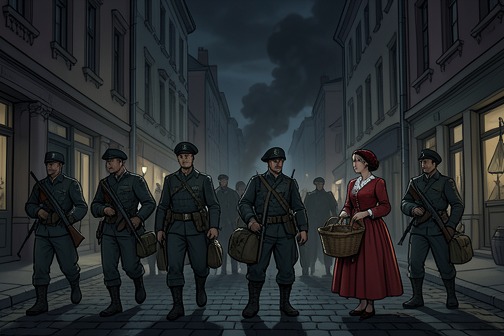
Back in [Delhi](entity:location-recall-location-delhi-0ebfda7a8b21), Saleem emerged from [Parvati](entity:character-recall-character-parvati-4a5485bca332)’s basket in the shadow of the [Friday Mosque](entity:location-recall-location-8363853dd02a) and was welcomed by [Picture Singh](entity:character-recall-character-picture-singh-12d85c66b5a1) and the magicians. [Resham Bibi](entity:character-recall-character-resham-bibi-0d7942a2cb1e) warned that he brought bad luck, but his arrival coincided with a burst of success for the performers, who credited him with good fortune.
Saleem stayed only a few days. He was preoccupied with the secret that [Shiva](entity:character-recall-character-shiva-a32afbfe6397) had entered his life and with the possibility that his rival might discover their exchanged identities. He left the ghetto to seek help from his uncle [Mustapha Aziz](entity:character-recall-character-mustapha-aziz-48e601d14520), carrying his history and guilt with him.
December 1971–February 1973
Saleem’s Stay with Mustapha
[Mustapha Aziz](entity:character-recall-character-mustapha-aziz-48e601d14520)’s household was ruled by failure, resentment, and violence. His wife Sonia rejected Saleem, and their children had been beaten into near-anonymity. [Mustapha](entity:character-recall-character-mustapha-11cfcee86a92) spent his time compiling genealogies and serving whichever government was in power, while Saleem waited for the patronage he hoped would let him help save India.
He found no support. Sonia’s jealousy and Mustapha’s unwillingness to risk his position left Saleem idle and increasingly disillusioned. When he learned more about his family’s deaths and Jamila’s disappearance, he accepted that he had no future in the household.
February 23, 1973
Saleem Leaves Mustapha’s House
After 420 days in [Mustapha](entity:character-recall-character-mustapha-11cfcee86a92)’s home, Saleem was caught in bed with [Parvati-the-witch](entity:character-recall-character-parvati-the-witch-f33a3ca65115). Sonia used the incident as grounds to expel him, while Mustapha accused him of being a dirty outsider. The encounter ended Saleem’s last refuge among relatives.
[Parvati](entity:character-recall-character-parvati-4a5485bca332) was waiting outside. Saleem returned with her to the [magicians’ ghetto](entity:location-recall-location-a250f1ff822f), accepting poverty and exclusion rather than remaining in a household that had never accepted him. The date marked a new beginning in his relationship with Parvati and his association with the performers.
1973–1974
Saleem Joins the Magicians’ Ghetto
Saleem settled among the mostly Communist magicians and performers beneath the [Friday Mosque](entity:location-recall-location-8363853dd02a), sharing a shack with [Picture Singh](entity:character-recall-character-picture-singh-12d85c66b5a1) and working as his assistant. Picture Singh’s snake acts mixed performance with socialist lectures, and Saleem felt at home among people whose grasp of reality was flexible but firm.
The ghetto’s internal political divisions echoed those of the Communist movement, but Picture Singh’s authority could temporarily hold the groups together. Saleem’s old ambition to save the nation returned, though his confidence in the mission began to weaken.
1973–1974
Parvati’s Unrequited Love
[Parvati](entity:character-recall-character-parvati-4a5485bca332) used her magic to heal Saleem’s appearance, but she wanted a husband and a family, while Saleem remained haunted by [Jamila Singer](entity:character-recall-character-jamila-singer-699fbbb15147)’s image. He could not bring himself to consummate their relationship because Jamila’s face seemed to replace Parvati’s whenever they were together.
Parvati’s efforts to find another husband failed. [Picture Singh](entity:character-recall-character-picture-singh-12d85c66b5a1) finally asked Saleem whether he would marry her, and Saleem admitted that he could not father children, continuing the lie of impotence that he had used to avoid marriage. The lie became the last barrier between the two friends.
May 1974
Shiva Returns to the Ghetto
Major [Shiva](entity:character-recall-character-shiva-a32afbfe6397) arrived at the [magicians’ ghetto](entity:location-recall-location-a250f1ff822f) after [Parvati](entity:character-recall-character-parvati-4a5485bca332) summoned him with a lock of his hair. He had become a celebrated war hero and an admired figure among the wealthy, while Saleem had become a poor, nameless former prisoner. Their roles had reversed since childhood.
Shiva’s arrival exposed the continuing rivalry between the two men and renewed the question of their birthright. Parvati had once supported Saleem in the [Midnight Children](entity:character-recall-character-255cf5dc67dd)’s Conference; now she had sought out Shiva, creating the conditions for her marriage to Saleem and the birth of a child fathered by Shiva.
January 1975
Parvati Returns Pregnant
After [Shiva](entity:character-recall-character-shiva-a32afbfe6397) abandoned her, [Parvati](entity:character-recall-character-parvati-4a5485bca332) returned to the ghetto visibly pregnant. Saleem’s lie that he was impotent had left her without a secure place in the community, and she had hoped that motherhood would force him to marry her.
Saleem continued to hesitate, unable to escape his attachment to Jamila and his fear of the future. The old women’s disapproval and Parvati’s pregnancy made the situation increasingly urgent, while the political crisis around [Indira Gandhi](entity:character-recall-character-indira-gandhi-b654aedd7ba1) gathered force.
February 23, 1975
Saleem Marries Parvati
On the second anniversary of Saleem’s return to the ghetto, he married [Parvati-the-witch](entity:character-recall-character-parvati-the-witch-f33a3ca65115), who took the name Laylah Sinai. The ceremony included henna, singing, and the exchange of small coins; Saleem still kept his distance on their wedding night because he feared the returning image of Jamila.
The marriage was shaped by necessity rather than mutual desire. [Parvati](entity:character-recall-character-parvati-4a5485bca332) needed social protection, Saleem had claimed impotence, and their union carried the prospect of a child whose biological father was [Shiva](entity:character-recall-character-shiva-a32afbfe6397). Their household became a new stage in the family’s recurring patterns of renamed identities and uncertain parentage.
June 12, 1975
Indira Gandhi’s Conviction
The Allahabad High Court found [Indira Gandhi](entity:character-recall-character-indira-gandhi-b654aedd7ba1) guilty of election malpractice, threatening her political position. In the [magicians’ ghetto](entity:location-recall-location-a250f1ff822f), [Parvati](entity:character-recall-character-parvati-4a5485bca332) was simultaneously gripped by the beginning of labor, while Saleem sensed that his life was approaching another decisive turn.
The political and private crises converged as the government prepared to suppress its opponents. Saleem understood the coming Emergency as another midnight-like rupture, one that would bring his family’s fate and the country’s history together again.
Midnight, June 25, 1975
Aadam Sinai Is Born
After thirteen days of labor, [Parvati](entity:character-recall-character-parvati-4a5485bca332) gave birth at midnight on June 25, the same moment that the Emergency was declared. The baby was Saleem’s son by adoption and [Shiva](entity:character-recall-character-shiva-a32afbfe6397)’s biological child, a new midnight-born infant tied to the history of the country.
The child was born with enormous ears, a protruding navel, and a grave silence. His arrival coincided with arrests, censorship, and the suspension of civil rights, linking his birth to the beginning of a dark period in India’s political life.
June 25, 1975–1976
The Emergency’s Midnight
During the Emergency, [Aadam Sinai](entity:character-recall-character-aadam-sinai-16be08ab3294) suffered from tuberculosis and refused to speak. [Parvati](entity:character-recall-character-parvati-4a5485bca332) tried magical remedies, but Saleem believed the child’s illness reflected the pallid, sickened state of the country. The infant’s silence and willfulness marked him as unlike Saleem, who had once tried to absorb every voice around him.
Saleem’s life in the ghetto grew more precarious as state repression expanded. His warnings about the political darkness were dismissed, while Parvati’s attention centered on their child and the fragile household they had made.
During the Emergency, 1976
The Magicians’ Ghetto Is Raided
A state-directed demolition and sterilization operation targeted the [magicians’ ghetto](entity:location-recall-location-a250f1ff822f). Sanjay Gandhi’s volunteers arrived with bulldozers, tents, and medical equipment, ordering residents to evacuate and submit to sterilization. The magicians resisted with stones, tricks, and improvised weapons, but police and troops overwhelmed them.
Saleem was seized by Major [Shiva](entity:character-recall-character-shiva-a32afbfe6397) amid the chaos. [Parvati](entity:character-recall-character-parvati-4a5485bca332) and Aadam were left behind as the settlement was crushed, while [Picture Singh](entity:character-recall-character-picture-singh-12d85c66b5a1) disappeared into the moving network of surviving illusionists. The raid turned the Emergency’s supposed civic improvement into an assault on the poor and on the people who carried India’s unruly histories.
During the Emergency, 1976
Saleem Is Captured
Major [Shiva](entity:character-recall-character-shiva-a32afbfe6397) forced Saleem into a van and delivered him to the authorities. At the Widow’s Hostel in [Benares](entity:location-recall-location-5f6c093edcaf), Saleem was held in a small cell and questioned by two humorless interrogators. Under their pressure, he revealed the identities and whereabouts of the [Midnight Children](entity:character-recall-character-255cf5dc67dd).
Saleem’s confession betrayed the people he had once gathered into a mental parliament. He later admitted that his cooperation was shameful, even if he had been coerced and had not known what the regime intended to do. The Widow had gained the information needed to round up the remaining children.
1976
The Midnight Children Are Rounded Up
The remaining [Midnight Children](entity:character-recall-character-255cf5dc67dd) were brought to the [Widows’ Hostel](entity:organization-recall-organization-widows-hostel-d78b04edc2ee), where they were restrained and subjected to intimidation. Saleem heard their whispers through the walls and learned that some had escaped or died, leaving 420 prisoners in the regime’s custody.
Their brief unity offered Saleem a measure of hope, but the government prepared a more decisive attack. The children’s gifts made them appear like rivals to the Widow’s authority, and the regime set out to eliminate both their powers and their capacity to reproduce.
January 1977
The Children Are Sterilized
The Widow’s Hand told Saleem that the regime regarded the children as rival gods and therefore feared them. The prisoners were taken one by one for irreversible operations. Their reproductive organs were removed, and their supernatural gifts were extinguished along with their hope for a shared future.
Saleem’s own prior sinus operation meant he had already lost his telepathy, but he was still subjected to the regime’s assault. The experience completed the political destruction of the [Midnight Children](entity:character-recall-character-255cf5dc67dd)’s Conference and left its survivors scattered, powerless, and unable to reproduce their extraordinary generation.
January–March 1977
The Emergency Falls
[Indira Gandhi](entity:character-recall-character-indira-gandhi-b654aedd7ba1) called a general election on the day the children’s sterilizations ended. Her government was defeated, and the Emergency came to an end. Saleem was released from the [Widows’ Hostel](entity:organization-recall-organization-widows-hostel-d78b04edc2ee) in March, but he had lost his telepathy, his spittoon, and his belief that he could shape the nation’s history.
The remaining children dispersed, each returning to private life. Saleem left [Benares](entity:location-recall-location-5f6c093edcaf) with a sense of exhaustion and diminished purpose, while the country attempted to forget the violence of the Emergency.
March 1977
Saleem Returns to Delhi
Saleem made his way back to [Delhi](entity:location-recall-location-delhi-0ebfda7a8b21) and found [Picture Singh](entity:character-recall-character-picture-singh-12d85c66b5a1) and the surviving magicians beneath the railway bridge at Shadipur. He also reunited with his son Aadam, who had recovered from tuberculosis and remained silent, watchful, and unusually self-possessed.
[Padma](entity:character-recall-character-padma-2370e46889ba) proposed marriage so that she could care for Saleem without social shame. Saleem accepted, though he feared the cracks in his body and the possibility that his approaching death would leave her a widow. The decision briefly opened the possibility of a future beyond his inherited fatalism.
Spring 1977
Aadam Weans Himself
[Aadam Sinai](entity:character-recall-character-aadam-sinai-16be08ab3294) abruptly stopped nursing from [Durga](entity:character-recall-character-durga-8e5b45ea0907) and insisted on eating solid food. The decision suggested that the child’s will was already separating him from the older generation’s stories and dependencies.
Saleem read his son’s silence and self-direction as evidence that a new generation might be more resistant than the first [Midnight Children](entity:character-recall-character-255cf5dc67dd). He continued to care for Aadam while preparing to finish the history he had begun writing.
1977
Picture Singh’s Bombay Challenge
A paan-wallah in [Connaught Place](entity:location-recall-location-b16fa7edb65b) told [Picture Singh](entity:character-recall-character-picture-singh-12d85c66b5a1) that another snake-charmer in [Bombay](entity:location-recall-location-bombay-b9f73c3bdba6) was considered more charming. The remark pierced the old performer’s confidence, and he decided to travel south to challenge his rival.
Saleem agreed to accompany him, bringing Aadam along. The journey reopened the path to Bombay and to the past, while Picture Singh’s fading powers and Saleem’s nostalgia gave the trip the quality of a final test.
1977
The Contest at the Nightclub
In [Bombay](entity:location-recall-location-bombay-b9f73c3bdba6), [Picture Singh](entity:character-recall-character-picture-singh-12d85c66b5a1) challenged the Maharaja of Cooch Naheen at the underground [Midnite-Confidential Club](entity:location-recall-location-midnite-confidential-005348b71917). The two snake-charmers performed in the dark before an audience of wealthy couples seeking anonymity. Picture Singh eventually outlasted his younger rival and won the contest.
The victory left Picture Singh exhausted and brought Saleem face-to-face with a changed Bombay. During the celebration, Saleem tasted a chutney whose flavor carried him back to the food [Mary Pereira](entity:character-recall-character-mary-pereira-3d16748f09cc) had made in his childhood, giving him a new path to the past.
1977
Saleem Finds Mary Pereira
The chutney’s familiar taste led Saleem to the Braganza pickle factory, where he found [Mary Pereira](entity:character-recall-character-mary-pereira-3d16748f09cc), now the company’s manager. Mary had built a successful business with help from Alice and the [Narlikar women](entity:character-recall-character-narlikar-women-043ac73e421c), and still remembered the crime that had shaped Saleem’s life.
Saleem and Mary reunited, and he began working in the factory, turning his memories into pickles as well as written chapters. He had forgiven Mary, but their meeting also confirmed that his family’s history could not be separated from the acts of love, guilt, and chance that created it.
Late 1977
Aadam Speaks
At three years old, [Aadam Sinai](entity:character-recall-character-aadam-sinai-16be08ab3294) finally spoke, carefully uttering “Abba” and then “cadabba,” abracadabra. The word startled Saleem and Mary, who saw in it a possible echo of the magic and history that had shaped the family.
Aadam’s first word offered no clear promise of a supernatural gift, but it reopened the novel’s question of what the child would become. Saleem returned to his writing, aware that his son would inherit a world changed by the Emergency and by the many lives his father had tried to preserve in memory.
As Saleem approaches thirty-one
Saleem Completes His Pickles
Saleem finished a cycle of thirty pickle jars, each labeled with a chapter of his life. The jars preserved memories but also altered them through selection, emphasis, and the unavoidable distortions of narration. He understood that history could be kept alive without being perfectly reproduced.
One jar remained empty, reserved for a future that could not be pickled because it had not yet happened. Saleem imagined marrying [Padma](entity:character-recall-character-padma-2370e46889ba), traveling to [Kashmir](entity:location-recall-location-kashmir-807a93287569), and being trampled by a crowd on his birthday, but he knew that prophecy and history might still have the last word.
August 15, as Saleem approaches thirty-one
Saleem’s Final Vision
Saleem imagined his birthday wedding to [Padma](entity:character-recall-character-padma-2370e46889ba), a journey toward [Kashmir](entity:location-recall-location-kashmir-807a93287569), and a vast crowd gathering for Independence Day. In the vision, familiar faces from his past pressed in around him as his body cracked and broke apart under the multitudes.
He foresaw that the crowd would trample him into dust, just as it would eventually consume his son and later generations. His final prophecy returned to the novel’s central paradox: the children of midnight were both shaped by their times and overwhelmed by them, unable to live or die in peace outside history.